AI Video · Animation
AI Animation
When every brand in your niche runs the same talking-head UGC, the feed goes blind to it. Animation resets attention — and AI has made it fast and affordable enough to use in ads, not just brand films. We art-direct AI animation in the style your brand needs, from soft Pixar-style 3D to claymation, toon, paper craft and low-poly, keep characters on-model from shot to shot, and finish it with the timing, sound and motion design of a real animation studio.
- Brands whose ads look like every competitor's UGC and need a distinct visual language
- Health, supplement and wellness brands that need to show what happens inside the body
- Companies building a mascot or recurring character for social and ads
- Teams that want an animated brand film without a months-long animation pipeline
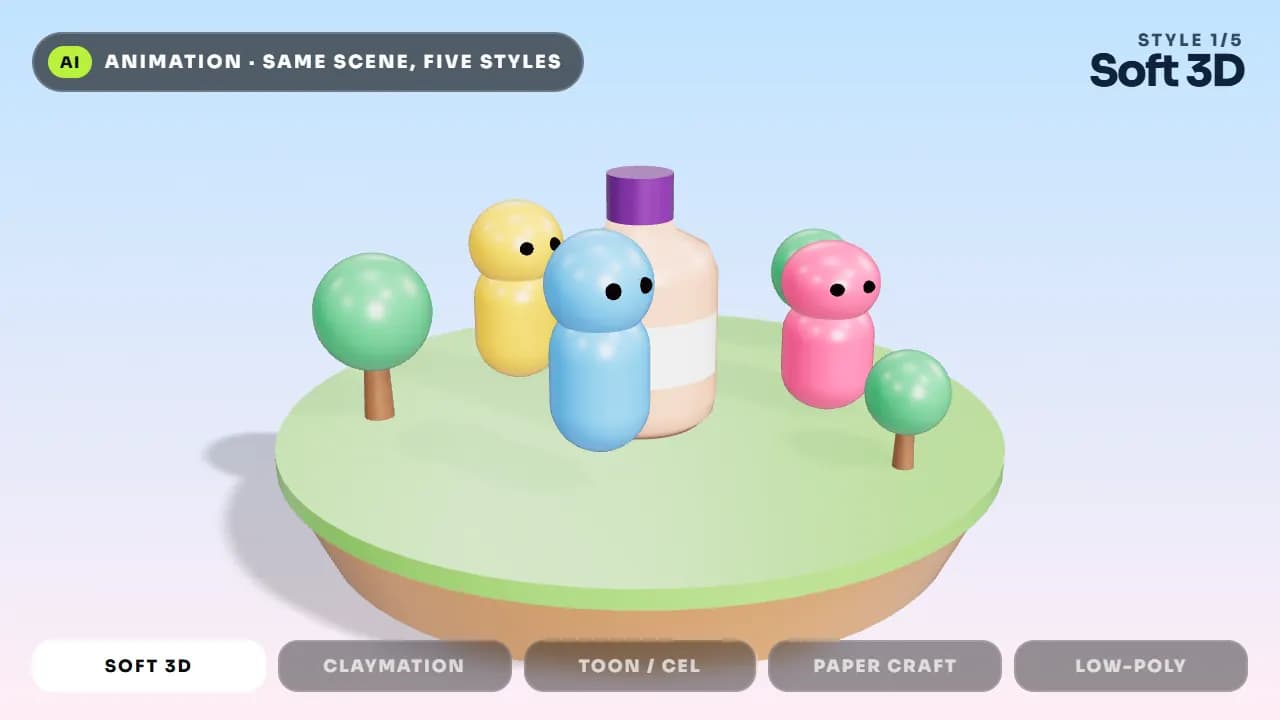
Real client work · AI Video
CloudRx: An AI-animated promo that makes digital prescribing feel effortless for doctors
A soft-3D, Pixar-style cast — doctors, clinic staff and patients — kept on-model across every scene of a 62-second film, produced entirely with AI animation and finished with voiceover, captions and sound design.
HealthTech · Digital Prescriptions
Read the CloudRx case study Watch the videoAnimation used to be the slowest, most expensive way to make an ad
Traditional 3D or stop-motion animation means modelling, rigging, texturing, lighting and rendering — weeks of work before a single ad exists, and a price that only makes sense for a hero brand film. So most brands never use animation in performance creative, even though an animated mechanism or a character world can explain a product and hold attention better than another person talking to camera. AI animation changes the cost structure: worlds, characters and camera moves can be generated in the chosen style in days. What it doesn't do on its own is stay consistent. Characters drift off-model, styles wobble between shots and the timing feels random. The difference between an AI animation that looks directed and one that looks generated is the art direction and animation craft around it.
What's included.
Every AI animation engagement covers all four of these — they are the work, not upsells.
Style development in the look you choose
We start with style frames: the same scene explored in two or three visual languages — soft 3D, claymation, toon or cel, paper craft, low-poly, anatomical or abstract — so you choose the look from real frames rather than adjectives. The approved frame becomes the reference for every shot in the film.
Characters that stay on-model
Mascots and characters get turnaround-style character sheets before animation starts: proportions, colours, expressions and costume. Every shot is generated against them and checked; shots where a character drifts off-model are regenerated rather than excused, which is what lets a character carry a series.
Mechanism and explainer animation
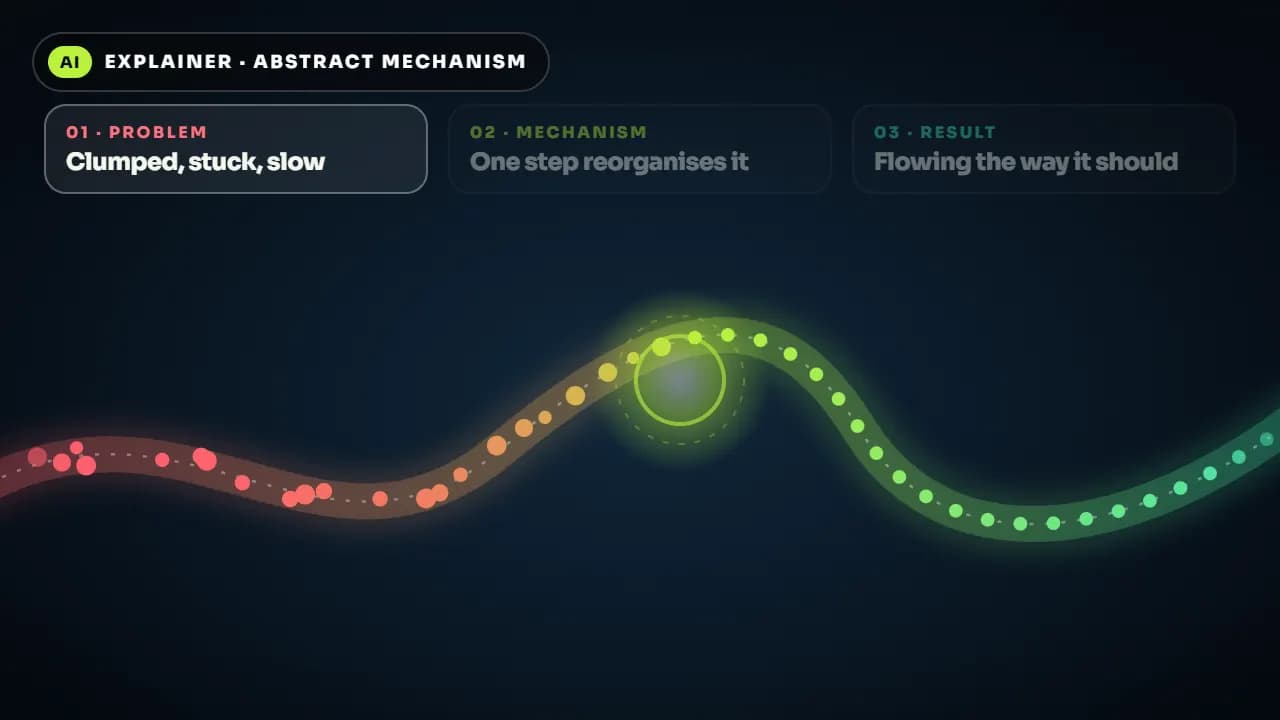
Some products are best sold by showing what happens where the camera can't go — inside the body, inside a device, inside a process. We storyboard the mechanism as a sequence of clear visual beats, animate it in the chosen style, and label it with on-screen steps and voiceover so the idea lands in seconds.
Animation-studio finishing
Generated shots are cut to a timed animatic, then finished like any animation: timing and holds, sound design and music, voiceover, titles and product end frames designed by our motion team. The result plays as one film with one rhythm, not a sequence of impressive but unrelated clips.
See the work.
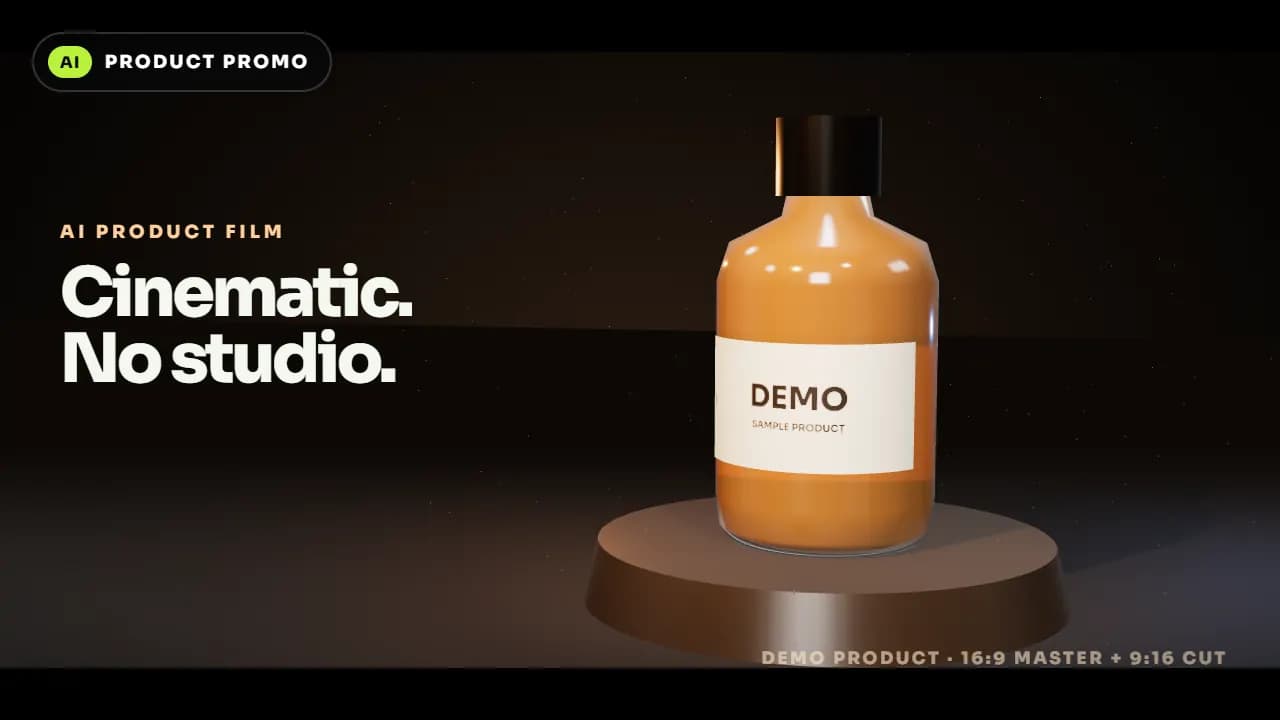
Style samples for this service — grouped by what they demonstrate, because that is how buyers actually choose.
What you actually receive.
Resolutions, ratios, formats, and source files — stated up front rather than discovered at handover. Full delivery specification.
- Styles
- Soft 3D (Pixar-style), claymation / stop-motion, toon / cel, paper craft, low-poly, anatomical and abstract
- Formats
- Animated ads, mechanism explainers, mascot series, brand films and animated product intros
- Aspect ratios
- 16:9 (1920×1080) and 9:16 (1080×1920) masters, with 4:5 and 1:1 versions for feed
- Lengths
- 6–30s ad cuts; 30–90s explainers and brand films, scoped per project
- Pre-production
- Style frames, character sheets and a storyboard or animatic approved before full production
- Audio
- Voiceover (human or synthetic, agreed up front), licensed music and custom sound design
- Delivery
- MP4 (H.264) masters and cutdowns, captions burned in plus .srt and .vtt, stills per scene
- Reusable assets
- Character sheets and style frames delivered with the film, ready for the next episode or ad
How it gets made.
The sequence for this service specifically. How we work, in detail.
- 01
Brief and story
What the film has to make the viewer understand or feel, and in how many seconds. For explainers this is the mechanism written as beats; for ads, the angle and the hook.
- 02
Style frames
The key scene explored in two or three visual styles. You pick one, and it becomes the reference every shot is held to.
- 03
Characters and storyboard
Character sheets for anyone on screen, and a storyboard or timed animatic of the whole film. Changes here cost minutes; the same changes after animation cost shots.
- 04
Generate and animate
Shots are generated against the style and character references, several takes each, and the best are selected and refined. Motion graphics, titles and product frames are designed alongside.
- 05
Edit, sound and delivery
The film is cut to the animatic's timing, voiced, scored and sound-designed, then exported as a master and every cutdown and ratio you need.
What it costs.
AI animation is quoted per project against an approved storyboard, because a six-second animated hook and a ninety-second mechanism explainer differ enormously in scope. The quote fixes the style, length, number of cutdowns and ratios before production. Brands running a recurring character or an animated ad series usually move to the monthly retainer once the style and characters are locked.
AI Animation questions.
AI animation is animated video — characters, worlds, mechanisms, product scenes — where the frames are generated by AI models in a chosen visual style instead of being modelled, rigged and rendered by hand. It makes styles like soft 3D and claymation affordable for ads and short films. Good AI animation still needs art direction, character consistency, timing and sound, which is the part a studio adds.
Yes. CloudRx, a digital prescribing platform, runs a 62-second promo we made entirely with AI animation: soft, Pixar-style 3D doctors, clinic staff and patients carry a before-and-after story about digital prescribing across several scenes, held on-model throughout, then edited to a voiceover with captions and sound design. You can watch it on this page and on the CloudRx case study.
Yes — soft, rounded Pixar-style 3D and claymation are two of the styles current AI models handle best, along with toon/cel, paper craft and low-poly looks. We develop the style from frames first, so you approve the exact look before production. We don't use any studio's trademarked characters or copy a specific film; the style is a visual language, the characters are yours.
That is what the character sheet is for. We build a reference for the mascot — proportions, colours, expressions and outfits — and hold every shot to it, regenerating any take where it drifts. The sheet is delivered with the project, so future episodes and ads start from the same character.
For most ad and social formats, significantly — there is no modelling, rigging or render farm, and changing a scene is a regeneration rather than a rebuild. Traditional 3D is still the right choice when you need exact engineering accuracy, a product that must be modelled precisely, or long-form content with complex character acting. For precise product models, see our 2D/3D Product Intro service.
That is one of its best uses. Mechanism explainers — what a supplement does in the gut, how a filter cleans water, how data moves through a platform — used to need a 3D team for weeks. We storyboard the mechanism as a few clear beats, animate it in an anatomical, abstract or stylised look, and label each step on screen. For health and supplement brands we keep to claims you can substantiate: the animation shows the mechanism, not a promised result.
It depends mostly on length and how many characters must stay consistent. A short animated ad is far quicker than a multi-scene explainer, and the style-frame and storyboard approvals are usually what set the pace. The timeline is written into the quote alongside the scope, so it is agreed before work starts rather than estimated afterwards.
The finished film as an MP4 master, every agreed cutdown and aspect ratio, captions burned in and as .srt/.vtt files, stills of key scenes, and the character sheets and style frames used to make it. Music and any stock are licensed for your commercial use and listed in the delivery.
More on ownership, licensing, payment, and revisions in the full FAQ.
What clients say.
“Degird was great to work with. They understood what I wanted and delivered a clean, high-quality promo and walkthrough videos that matched my expectations. Communication was smooth, and the whole process was easy. I'd definitely recommend Degird.”
Ratul Hasan
“I had a fantastic experience with Degird! I worked with them to implement a Lottie animation for my application, and the results exceeded my expectations. The process was smooth, professional, and the team made everything easy to integrate. Highly recommend Degird for anyone looking to enhance their app with high-quality animations!”

SM Jony
Verified reviews, not cherry-picked quotes.
We'd rather send you to an independent review platform than write our own testimonials. See what clients say about working with Degird on Trustpilot.
Read Our Trustpilot ReviewsNeed AI animation?
Tell us what the video has to achieve and when you need it. We reply within one business day with a package or a scoped quote.
Start your project