Motion Graphics
Motion Graphics & VFX
Graphics are how a video says the things footage cannot show: a number, a comparison, a process, a name. We build animated typography, data visualisation, and composited effects into edits — either as part of a production we are already making, or as a layer added to footage you have already cut.
- Teams with a finished edit that reads flat because every explanation is being carried by the voiceover alone
- Marketers who need real numbers on screen — funnel charts, comparisons, growth curves — animated from actual data rather than mocked up
- Founders filming to camera who need on-screen callouts, screen replacements, and clean-up so the shoot looks intentional
- Editors who need a compositing pass — tracking, roto, keying, object removal — on shots their timeline cannot solve
The moment a video needs a graphic is usually the moment it is failing
Watch any edit that is not working and you will find the same thing: a stretch where the narrator is describing something abstract while the picture shows a person talking, or a slow pan, or nothing in particular. The viewer has to hold the idea in their head unaided, and that is precisely where attention leaks. A graphic fixes it by putting the abstraction on screen — the number, the before-and-after, the three steps in order — so the eye and the ear are carrying the same idea at the same time. The failure mode in the other direction is just as common: graphics added because the edit felt bare, animating in with a swoosh, saying nothing the voiceover did not already say, and costing the viewer attention rather than saving it. The useful question is never "where could we add motion graphics". It is "which moments in this edit are asking the viewer to imagine something", and then only building those.
What's included.
Every motion graphics & VFX engagement covers all four of these — they are the work, not upsells.
Kinetic typography that is edited, not decorated
Type on screen works when it carries the argument rather than transcribing the voiceover. We pull the three or four phrases actually worth reinforcing, set them in your brand's typeface at sizes that survive a phone screen, and time their entrances to the beat of the read rather than to a preset. Everything else stays off screen. The result reads muted — which matters, because a large share of the people who meet your video in a feed will never turn the sound on.
Data visualisation built from your real numbers
Send the spreadsheet, not a screenshot of a chart. We build bar, line, funnel, and comparison animations from your actual figures — driven from CSV or JSON where the data will change, so the same composition can be re-rendered next quarter with new values instead of rebuilt. Axes, labels, and units stay legible at mobile size, and the animation reveals the point in the order a person reads it rather than everything arriving at once. If a number cannot be substantiated, it does not go on screen.
Compositing, tracking, and clean-up on live footage
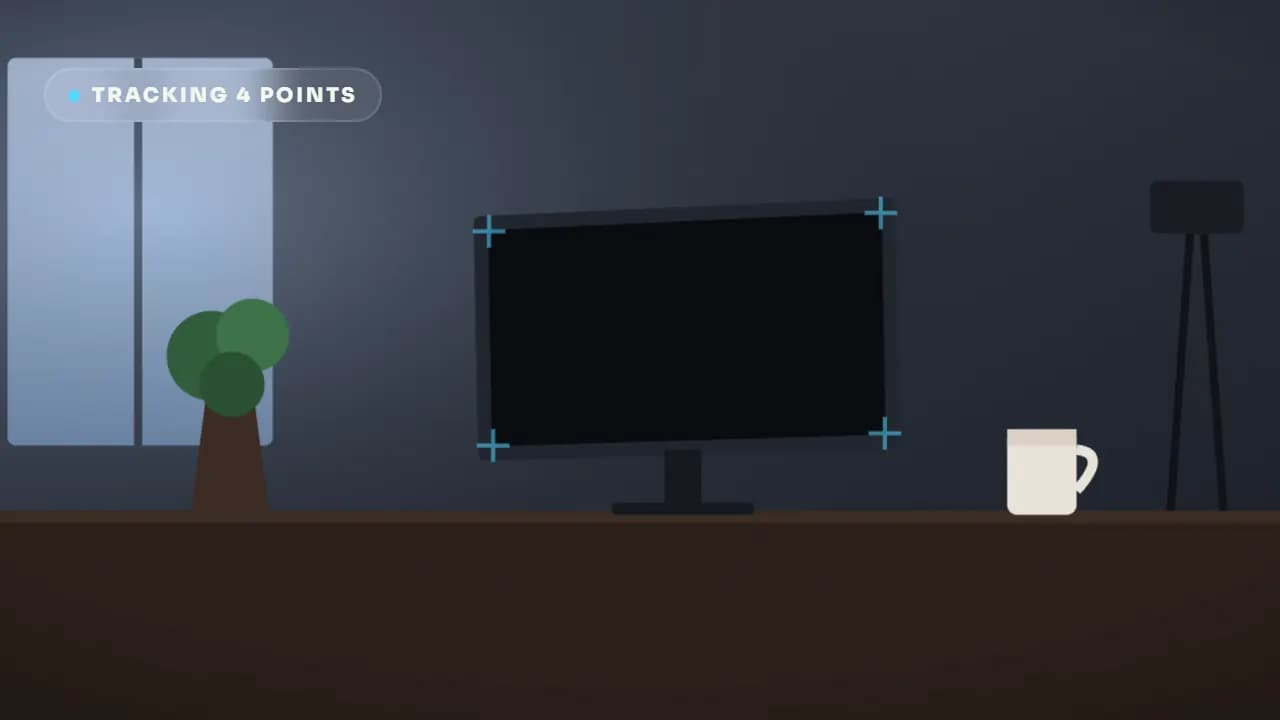
The unglamorous VFX that makes footage look deliberate: planar and 3D camera tracking so callouts stick to the thing they label, screen replacement so the laptop in shot shows your real UI instead of a moiré-fringed monitor, rotoscoping so graphics can pass behind a subject, green-screen keying with proper edge and spill work, and removal of the boom, the light stand, or the logo nobody cleared. Most of this is invisible when it is done well, which is exactly the point.
Graphics added to an edit you already own
You do not have to have hired us for the shoot or the edit. Send a locked cut plus the project file — or an XML, AAF, or EDL and the source media — and we build the graphics layer against your timeline, then hand back both the rendered piece and alpha-channel elements you can drop into your own project. Working against a locked cut is important: graphics timed to a sequence that later moves have to be re-timed frame by frame.
See the work.
Style samples for this service — grouped by what they demonstrate, because that is how buyers actually choose.
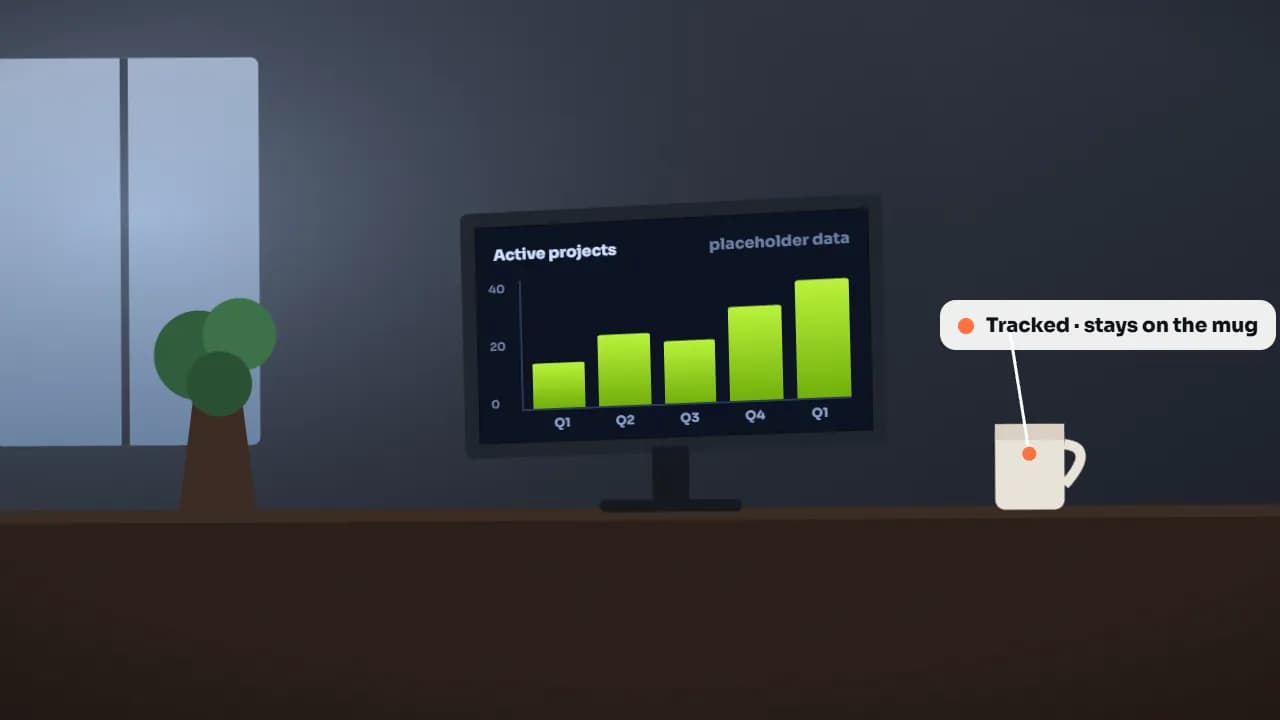
Placeholder data — axis labels stay legible at every frame
What you actually receive.
Resolutions, ratios, formats, and source files — stated up front rather than discovered at handover. Full delivery specification.
- Graphics types
- Kinetic typography, lower thirds and callouts, animated charts and infographics, process and flow diagrams, UI mockup animation
- VFX scope
- Planar and 3D camera tracking, rotoscoping, green-screen keying with spill suppression, screen replacement, object and rig removal, clean plates
- Data sources
- CSV, JSON, or a spreadsheet — linked where figures will change, so a re-render replaces a rebuild
- Comp resolution
- Built at 4K (3840×2160) or 1080p in the project's frame rate, with motion blur matched to the plate
- Alpha delivery
- MOV (ProRes 4444) and PNG sequence for elements that go into your own edit; WebM (VP9 alpha) for web overlays
- Standard delivery
- MP4 (H.264) masters in 16:9, 9:16, 1:1, and 4:5, with graphics repositioned per safe area rather than cropped
- Source files
- After Effects project with linked plates, fonts, tracking data, and roto splines — plus the data file where charts are linked
- Plugin policy
- Built with stock After Effects tools by default; any third-party plugin used is named up front so your team is never blocked opening the project
How it gets made.
The sequence for this service specifically. How we work, in detail.
- 01
Shot breakdown against the locked cut
We watch the edit and mark every moment that is asking the viewer to imagine something, plus every shot with a technical problem — a screen to replace, a rig to remove. You get that list with timecodes and a recommendation on which ones actually earn a graphic.
- 02
Look development on styleframes
Two or three finished frames showing how the graphics sit in your footage: type treatment, chart styling, colour against the plate. Approved as stills, because a look changed after twenty shots are animated is a re-do rather than an edit.
- 03
Plate prep — track, roto, key
The technical groundwork before anything creative is placed: tracks solved, mattes pulled, splines animated, clean plates built. Rushed prep is the single most common cause of a graphic that slides, floats, or fringes, so this stage gets its own time.
- 04
Animation and compositing
Graphics animated, elements composited into the plate, grain and motion blur matched so the addition sits in the shot rather than on top of it. You review a watermarked draft within the revision rounds your engagement includes.
- 05
Render, conform, and hand over
Final renders conformed back into the edit, alpha elements exported separately for your own timeline, and the project files delivered with tracking data and splines intact so a later change does not start from the plate again.
Where we've done it.
Real clients, live products. Every one of these links to the finished work in the place it actually runs.
HealthTech · Digital Prescriptions
CloudRx
An AI-animated promo that makes digital prescribing feel effortless for doctors
Read the case study Watch the videoE-commerce · Cart Recovery
CartResQ
Making automated cart recovery feel like a revenue tool, not another marketing plugin
Read the case studyWordPress · Image CDN & Performance
PixJet
Explaining server-side image optimization to people who just want a faster site
Read the case study Watch the videoSaaS · AI Email Marketing
EmailFunnelAI
Turning a prompt-to-funnel AI tool into a story people understand in 60 seconds
Read the case study Watch the videoWhat it costs.
Motion Graphics & VFX is included as an add-on in the Scale Package at $1,600 — alongside full editing on one footage set and everything in the Growth Bundle — on a 14-day turnaround for the whole kit, and again in the Full-Funnel Bundle from $2,900. A standalone VFX or graphics pass on footage you already have is scoped as a one-off project, typically 7 to 10 days depending on how much tracking and roto the shots need. Teams adding graphics continuously usually take the $2,450/mo retainer, where a single request averages about 48 hours; long-form 3D and heavy compositing are quoted in the queue before work starts.
Motion Graphics & VFX questions.
Motion graphics are elements that were never filmed — type, charts, icons, diagrams, UI — animated and placed on screen to explain something. VFX is work done to the filmed image itself: tracking something onto a moving surface, removing an object, replacing a screen, keying out a green background, or building a shot that could not be captured. They overlap constantly, because putting a graphic into live footage so it sticks and belongs is a compositing job. In practice most projects need some of both, and we scope them together rather than as separate line items.
Yes, and it is one of the most common things we are asked for. The ideal handoff is a locked cut plus the project file with linked media; if you cut in a different application, an XML, AAF, or EDL along with the source footage works. We build the graphics against your timeline and hand back both the finished render and the elements as alpha-channel files you can drop into your own project. The one thing that matters is that the cut is locked — graphics timed to a sequence that later shifts have to be re-timed shot by shot.
Yes, and we would rather you send the raw figures than a picture of a chart. Give us a CSV, a JSON export, or a spreadsheet and we build the animation from those values, so the labels and proportions are correct rather than eyeballed. Where the numbers will be updated on a cycle — a quarterly report, a live metric — we link the composition to the data file so a refresh is a re-render rather than a rebuild. We will not put a figure on screen that you cannot substantiate, and we will flag any number in a brief that looks like it came from a rounding guess.
Both. A properly lit green screen gives the cleanest result — even lighting, subject well off the backdrop to avoid spill — and we handle the key, edge treatment, spill suppression, and light wrap so the subject sits in the new background rather than being pasted onto it. Without a green screen, removal is done with rotoscoping and clean plates: masking the subject frame by frame and rebuilding what was behind the removed element. That is slower and it is quoted by shot length and complexity, so send the specific clips and we will price the real work rather than an average.
By default, yes — we build with stock After Effects tools precisely so a handover never leaves your team staring at a missing-effect warning. If a shot genuinely needs a third-party plugin, we tell you before we use it and name it in the delivery, so you can decide whether to license it or have us solve the shot another way. Where a plugin was unavoidable, we also supply a pre-rendered version of that element with alpha, so the project remains usable even without the plugin installed.
It depends almost entirely on shot count and how much plate prep is needed, not on the video's runtime. A kinetic typography pass over an existing edit is quick. A dozen shots needing planar tracking, rotoscoping, and screen replacement is not — roto in particular is per-frame work and it is what makes VFX quotes vary so widely. As a guide: the Scale Package covers a graphics add-on within its 14-day turnaround for the whole kit, standalone projects usually run 7 to 10 days, and single retainer requests average about 48 hours.
That is the default. Send your brand kit — logo files, typefaces, colour values, and any existing motion or animation guidelines — and the graphics are built inside those rules: your typeface at brand weights, your palette applied so text still passes contrast against the footage behind it, and easing that matches how the rest of your motion behaves. If you already have a brand motion system from us or anyone else, we work to it. If you have static guidelines and nothing about motion, we propose the motion rules and write them down so the next person inherits them.
More on ownership, licensing, payment, and revisions in the full FAQ.
What clients say.
“Degird was great to work with. They understood what I wanted and delivered a clean, high-quality promo and walkthrough videos that matched my expectations. Communication was smooth, and the whole process was easy. I'd definitely recommend Degird.”
Ratul Hasan
“I had a fantastic experience with Degird! I worked with them to implement a Lottie animation for my application, and the results exceeded my expectations. The process was smooth, professional, and the team made everything easy to integrate. Highly recommend Degird for anyone looking to enhance their app with high-quality animations!”

SM Jony
Verified reviews, not cherry-picked quotes.
We'd rather send you to an independent review platform than write our own testimonials. See what clients say about working with Degird on Trustpilot.
Read Our Trustpilot ReviewsNeed motion graphics & VFX?
Tell us what the video has to achieve and when you need it. We reply within one business day with a package or a scoped quote.
Start your project