Video Production
Video Editing & Post-Production
You have the footage. What you do not have is the version of it that holds attention — sequenced, graded, mixed, captioned, and cut down for every place it needs to run. We take a raw set of files and hand back a finished piece plus the project that made it, so the next edit does not start from zero.
- Teams sitting on hours of webinar, interview, or conference footage that has never been cut
- Founders who filmed a demo or a founder-story video themselves and need it to look deliberate
- Marketing leads who need one long-form edit plus the vertical and square cutdowns from the same shoot
- Studios and in-house editors who need a colour and sound finishing pass on an edit they already assembled
Footage is not content until somebody makes decisions about it
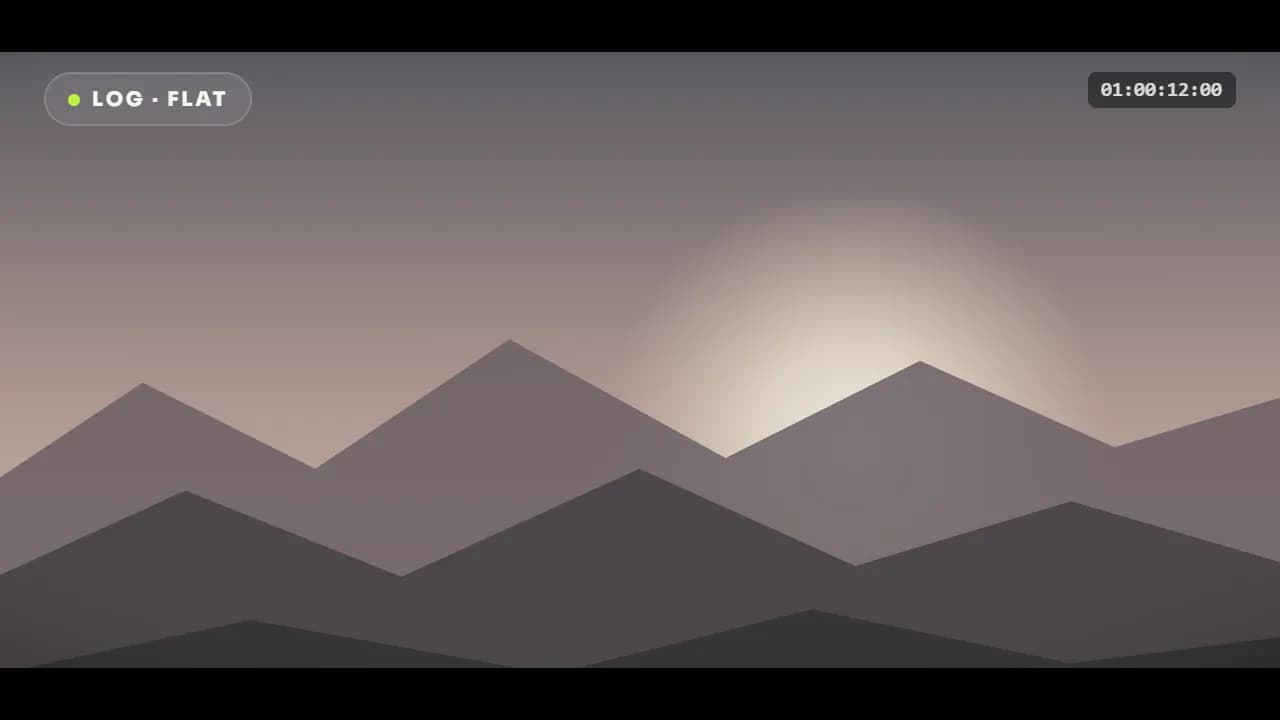
Most unedited footage fails for the same reason: nobody decided what to leave out. A ninety-minute webinar contains maybe eight minutes worth watching, and the difference between those two things is not software, it is judgement — knowing which answer actually landed, where the energy drops, which forty seconds will survive on LinkedIn. The technical layer matters too, and it is usually the part teams underestimate. Camera-original log footage looks flat and grey until it is graded. Room audio recorded on a laptop mic sits under the music and fights it. Levels bounce between speakers, so the viewer keeps reaching for the volume. None of that is visible in the raw files, which is why footage that felt fine on the day feels amateur on the site. Post-production is where those decisions get made once, deliberately, instead of being made by accident.
What's included.
Every video editing & post-production engagement covers all four of these — they are the work, not upsells.
A story cut before a polish pass
The first thing we build is structure, not effects. Footage is logged, synced, and cut into an assembly that establishes what the piece is about and in what order — then trimmed hard until only the parts that earn their runtime survive. You review that rough cut while it is still cheap to change, because reordering an unfinished sequence takes an afternoon and reordering a graded, mixed, captioned one takes a week. Nothing gets coloured or scored until the story is locked.
Colour correction, then colour grading
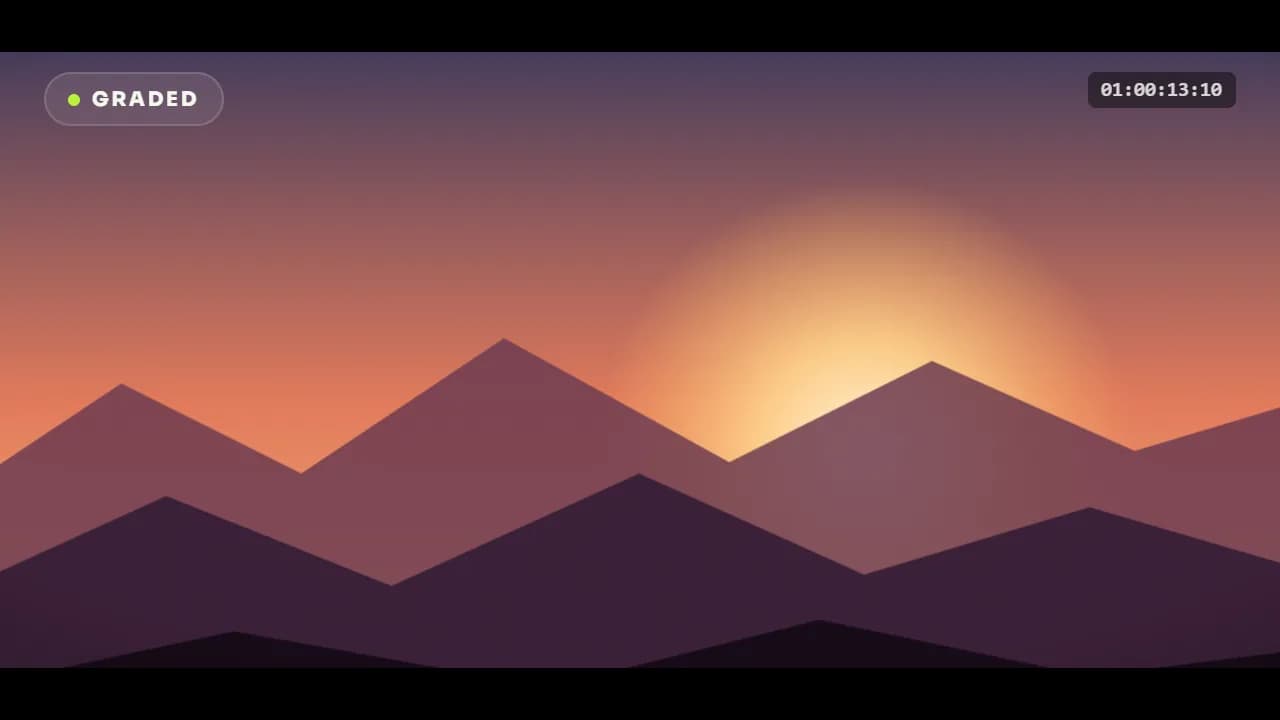
Two different jobs, done in that order. Correction is the technical pass: log or flat footage transformed to Rec. 709, white balance matched between cameras and between takes, exposure and skin tones checked against waveform and vectorscope rather than against whatever your monitor happens to be doing. Grading is the creative pass on top — the look, applied with masks and secondaries so the subject reads and the background supports rather than competes. If you have brand LUTs, we work to them; if you do not, we build a look and send stills for approval.
A sound mix people can actually listen to
Dialogue is cleaned before anything is added to it: noise reduction, hum and hiss removal, plosives and clicks fixed, levels evened out between speakers so nobody has to ride the volume. Then music is chosen and ducked under speech, effects are placed to support cuts and on-screen motion, and the whole mix is delivered at the loudness target the platform expects. Bad audio reads as low production value faster than bad picture does, and it is the cheaper of the two to fix properly.
Every version the piece needs, cut from one master
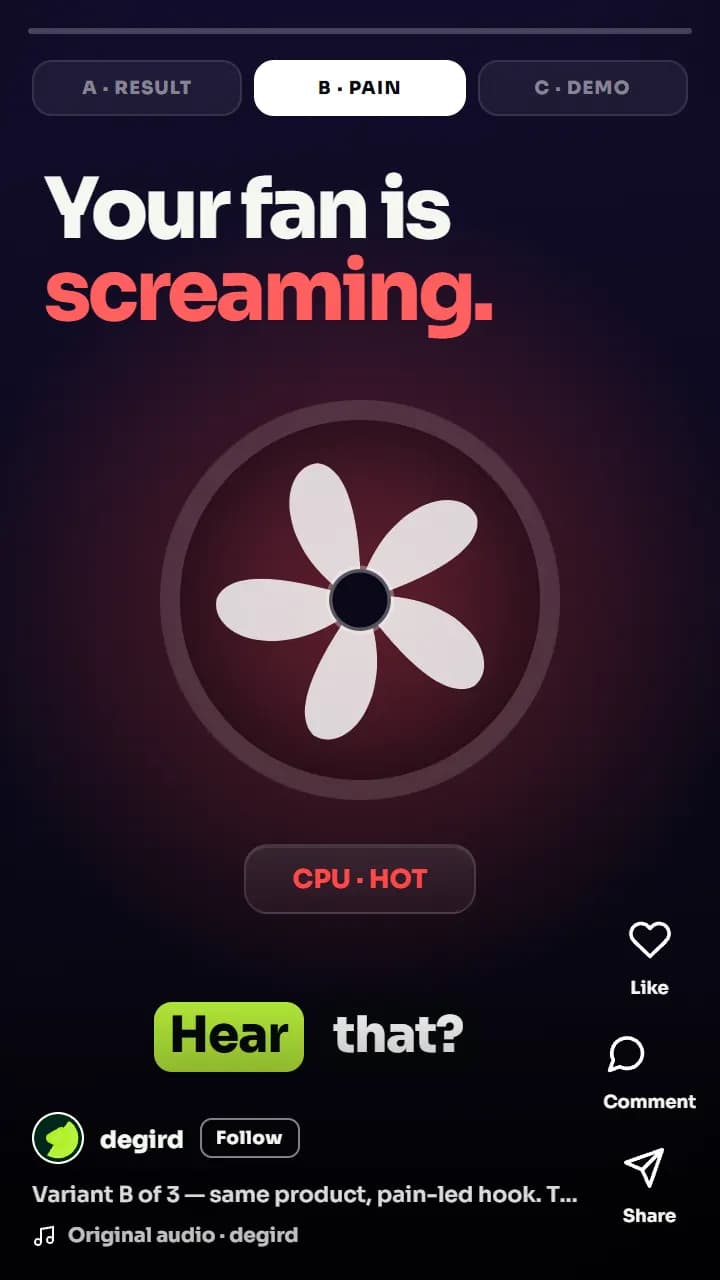
One edit is rarely one deliverable. From the same timeline we produce the long-form master, a short landing-page cut, and reframed 9:16, 1:1, and 4:5 versions with the subject and any on-screen text repositioned for each safe area rather than centre-cropped. Captions come as both burned-in and sidecar files, plus poster frames and social cards. Producing them together costs a fraction of commissioning each one as a separate job later.
See the work.
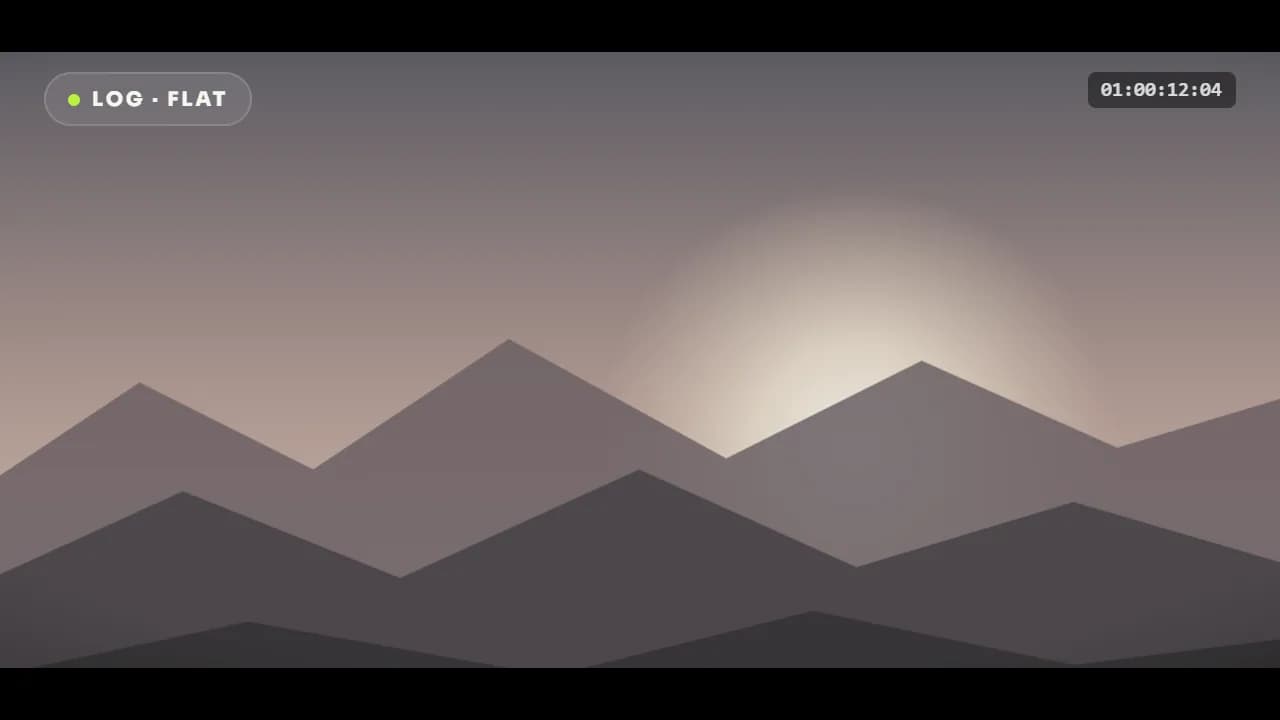
Style samples for this service — grouped by what they demonstrate, because that is how buyers actually choose.
What you actually receive.
Resolutions, ratios, formats, and source files — stated up front rather than discovered at handover. Full delivery specification.
- Footage accepted
- Camera originals, log or Rec. 709, up to 4K; multicam, screen recordings, phone footage, and existing timelines
- Edit length
- Up to 10 minutes of finished runtime on the Scale Package; longer edits scoped as a one-off project
- Colour
- Correction to Rec. 709 with camera-matching, then a creative grade — your brand LUT applied, or a look built and approved from stills
- Audio
- Dialogue clean-up, music bed, sound design, stereo mix at −14 LUFS, plus a music-and-effects-only stem for later re-voicing
- Aspect ratios
- 16:9 master plus reframed 9:16, 1:1, and 4:5 versions — repositioned, not centre-cropped
- Formats
- MP4 (H.264) as standard; MOV (ProRes 422) for onward editing and WebM (VP9) for background loops on request
- Captions
- Burned-in captions plus separate .srt and .vtt files, timed to the final cut
- Source files
- Full Premiere or After Effects project with linked media, fonts, grade nodes, and the audio session — plus XML/AAF on request
How it gets made.
The sequence for this service specifically. How we work, in detail.
- 01
Footage audit and sync
Everything is ingested, synced, and logged before a cut is made: multicam angles aligned to a common audio reference, unusable takes flagged, and gaps identified. If something critical was never filmed, you hear it in the first two days rather than in the second revision round.
- 02
Story cut for approval
A rough assembly with no grade, no music, and temp titles — deliberately unfinished so the conversation stays on structure. You approve the order and the runtime here. This is the cheapest change window in the whole project and the one most schedules waste.
- 03
Fine cut and picture lock
Timing tightened frame by frame, B-roll and screen inserts placed, on-screen titles and lower thirds laid in from your brand system. Once you sign off, picture is locked — finishing work assumes the cut will not move again.
- 04
Colour, sound, and graphics finishing
Correction and grade with stills sent for approval, dialogue clean-up and mix to the loudness target, motion graphics and captions applied against the locked timeline. Everything downstream of picture lock happens in parallel rather than in sequence.
- 05
Versioning and delivery
Masters rendered in every ratio and format you need, caption files, poster frames, and the full editable project handed over together — so a future change is a small job for whoever you hand it to, including a team that is not us.
Where we've done it.
Real clients, live products. Every one of these links to the finished work in the place it actually runs.
Desktop App · YouTube Publishing Automation
Tubeup
Showing a bulk-upload tool beat the manual routine it replaces, in one pass
Read the case study Watch the videoHealthTech · Digital Prescriptions
CloudRx
An AI-animated promo that makes digital prescribing feel effortless for doctors
Read the case study Watch the videoSaaS · AI Content Summarization
TubeOnAI
Showing, not telling, how one platform turns hours of video into a two-minute read
Read the case studyWordPress · Community & Support Platform
ZenCommunity
Turning five plugins' worth of features into one clear pitch in under a minute
Read the case study Watch the videoWhat it costs.
Full editing and post-production on one raw footage set of up to ten finished minutes is included in the Scale Package at $1,600, alongside everything in the Growth Bundle, with a 14-day turnaround for the whole kit. Larger or ongoing libraries are usually better served by a one-off project quote — 7 to 10 days on an agreed scope — or by the $2,450/mo retainer, where single edits and cutdowns come back from your queue in about 48 hours each.
Video Editing & Post-Production questions.
There is no fixed ratio, but the practical answer is that the shoot length matters far less than how much of it is usable. A ninety-minute webinar and a three-hour interview shoot can both become the same eight-minute edit. What changes the effort is the number of camera angles, whether the audio needs rescuing, and how many separate deliverables come out of the timeline. Send us the file list and the runtime and we will tell you what is realistic before you commit.
Correction is the technical stage: neutralising a flat log or raw image, setting white balance and exposure, and matching shots so cuts between cameras and takes are invisible. Grading is the creative stage that sits on top — the look, the mood, selective work on skin tones, sky, or product using masks and secondaries. Almost every problem people blame on a grade is actually an uncorrected image underneath it, which is why we always do them in that order and never skip the first one.
Yes. Send the camera originals in whatever log profile they were shot in and tell us the camera and profile, and we will start from a correct transform rather than eyeballing it. If you have brand LUTs from a previous production, we apply them as the creative layer over a corrected image, which is how they were designed to be used. If you have no LUTs, we build a look, send graded stills for approval, and can export it as a LUT you keep for future shoots.
Usually improved, sometimes rescued, occasionally not. Consistent problems — room hiss, air-conditioning hum, uneven levels between speakers, harsh plosives — respond well to clean-up and are part of the standard mix. Heavy echo from a reflective room, clipped and distorted peaks, and speech buried under louder noise are much harder, because the information is genuinely missing from the recording. Send us the worst thirty seconds you have before you book and we will tell you honestly which of those it is.
Yes, and it is a common request. Send the project file with linked media, or an XML or AAF export if you cut in a different application, and we pick up from your timeline for a finishing pass — colour, sound mix, graphics, captions, and versioning — without re-editing the story you already approved. If we think the cut itself is holding the piece back, we will say so and show you an alternative, but we will not quietly re-edit it.
Both. Every delivery includes the editable project with linked assets, fonts, grade settings, and the audio session, and on final payment ownership of the finished work and those source files transfers to you. There is no usage window, territory limit, or separate buy-out. You can hand the project to another studio or an in-house editor and they can pick it up without asking us for anything.
On the Scale Package the whole kit — including the edit — has a 14-day turnaround, because a package is several assets produced as one batch rather than a single file. A custom-scoped one-off edit typically runs 7 to 10 days with the schedule agreed in writing before kickoff. On the monthly retainer, single requests like a cutdown, a caption pass, or a re-grade average about 48 hours each, taken one at a time from your queue.
More on ownership, licensing, payment, and revisions in the full FAQ.
What clients say.
“Degird was great to work with. They understood what I wanted and delivered a clean, high-quality promo and walkthrough videos that matched my expectations. Communication was smooth, and the whole process was easy. I'd definitely recommend Degird.”
Ratul Hasan
“I had a fantastic experience with Degird! I worked with them to implement a Lottie animation for my application, and the results exceeded my expectations. The process was smooth, professional, and the team made everything easy to integrate. Highly recommend Degird for anyone looking to enhance their app with high-quality animations!”

SM Jony
Verified reviews, not cherry-picked quotes.
We'd rather send you to an independent review platform than write our own testimonials. See what clients say about working with Degird on Trustpilot.
Read Our Trustpilot ReviewsNeed video editing & post-production?
Tell us what the video has to achieve and when you need it. We reply within one business day with a package or a scoped quote.
Start your project